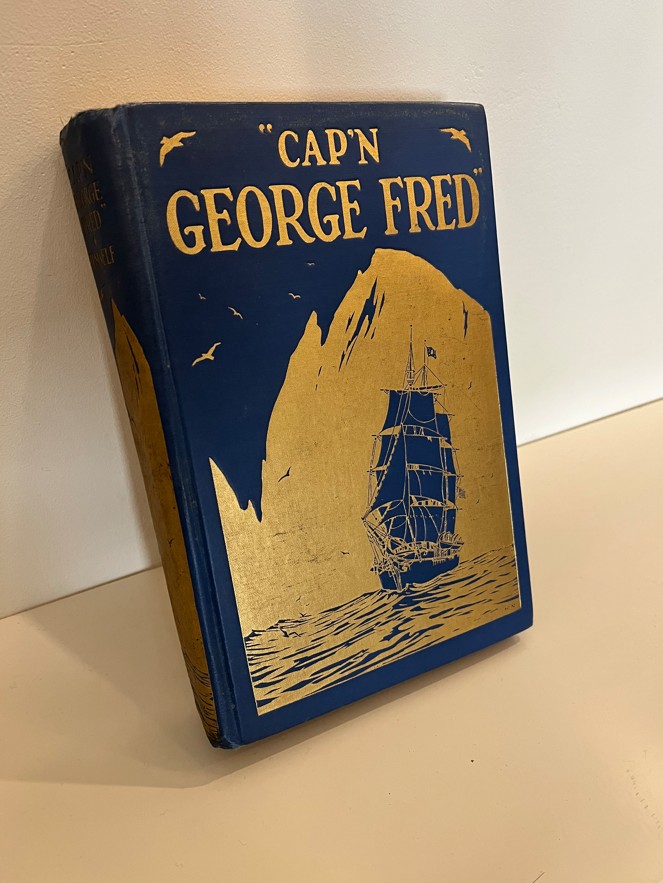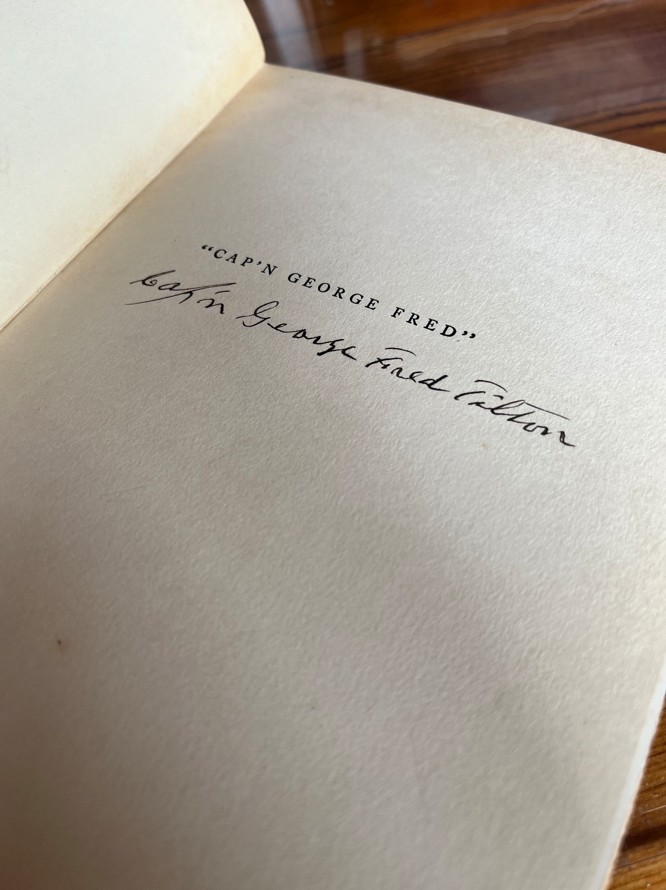
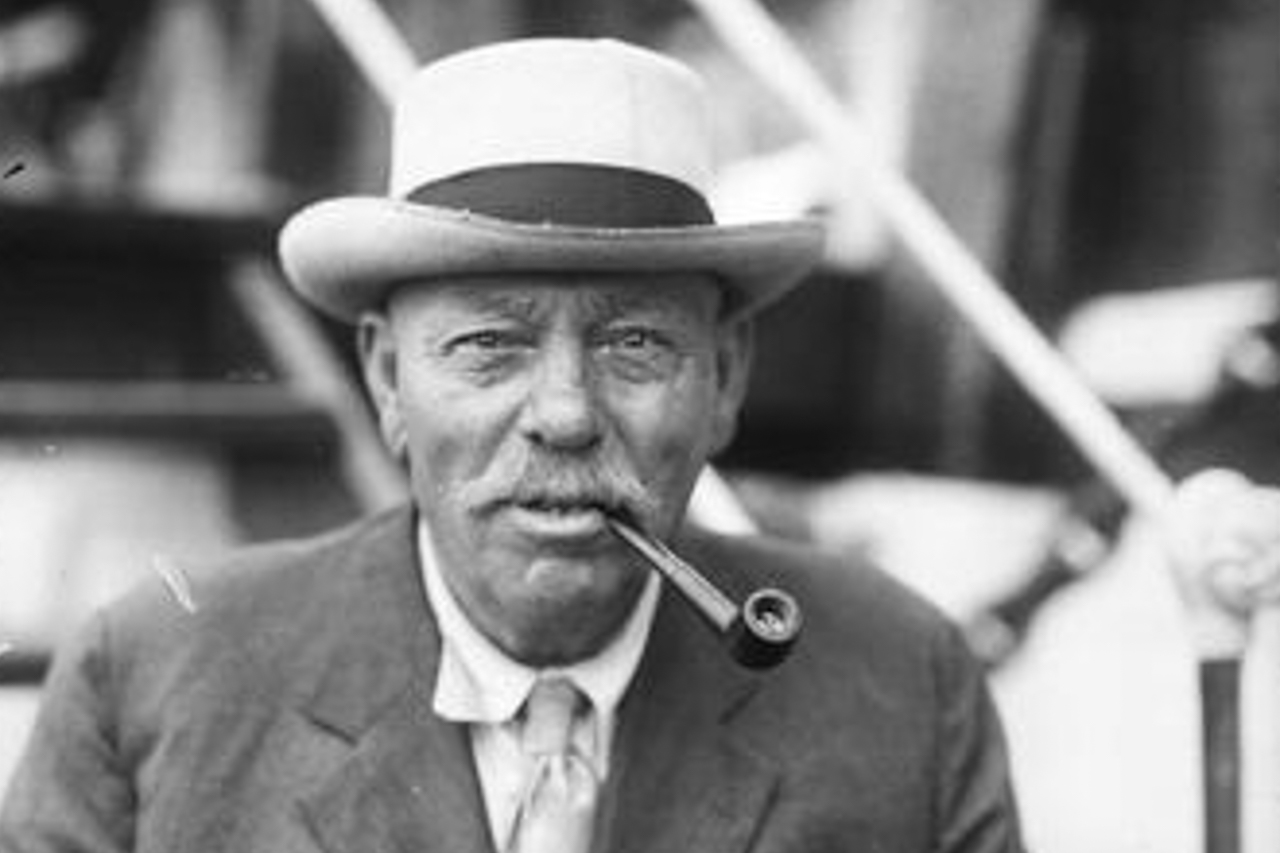
Captain George Fred Tilton (1861–1932) was a master mariner, Arctic whaler, author, and one of the most remarkable seafarers connected to New Bedford’s whaling history. Born in Chilmark on Martha’s Vineyard, Tilton was drawn to the sea from an early age. At just fourteen years old, he left home and joined a New Bedford whaling vessel, beginning a maritime career that would span more than forty years.
Over the decades that followed, Tilton sailed throughout the world’s whaling grounds and eventually commanded seven whaling vessels. His career took him around the globe, but it was an extraordinary journey through Alaska during the winter of 1897–1898 that became the defining story of his life.
That winter, several American whaleships were trapped in the ice near Point Barrow, Alaska. Hundreds of men faced months in the Arctic with dangerously limited provisions. Tilton volunteered to leave the stranded fleet and make the difficult journey south, reportedly declaring, “If anyone can make the trip, I can.”
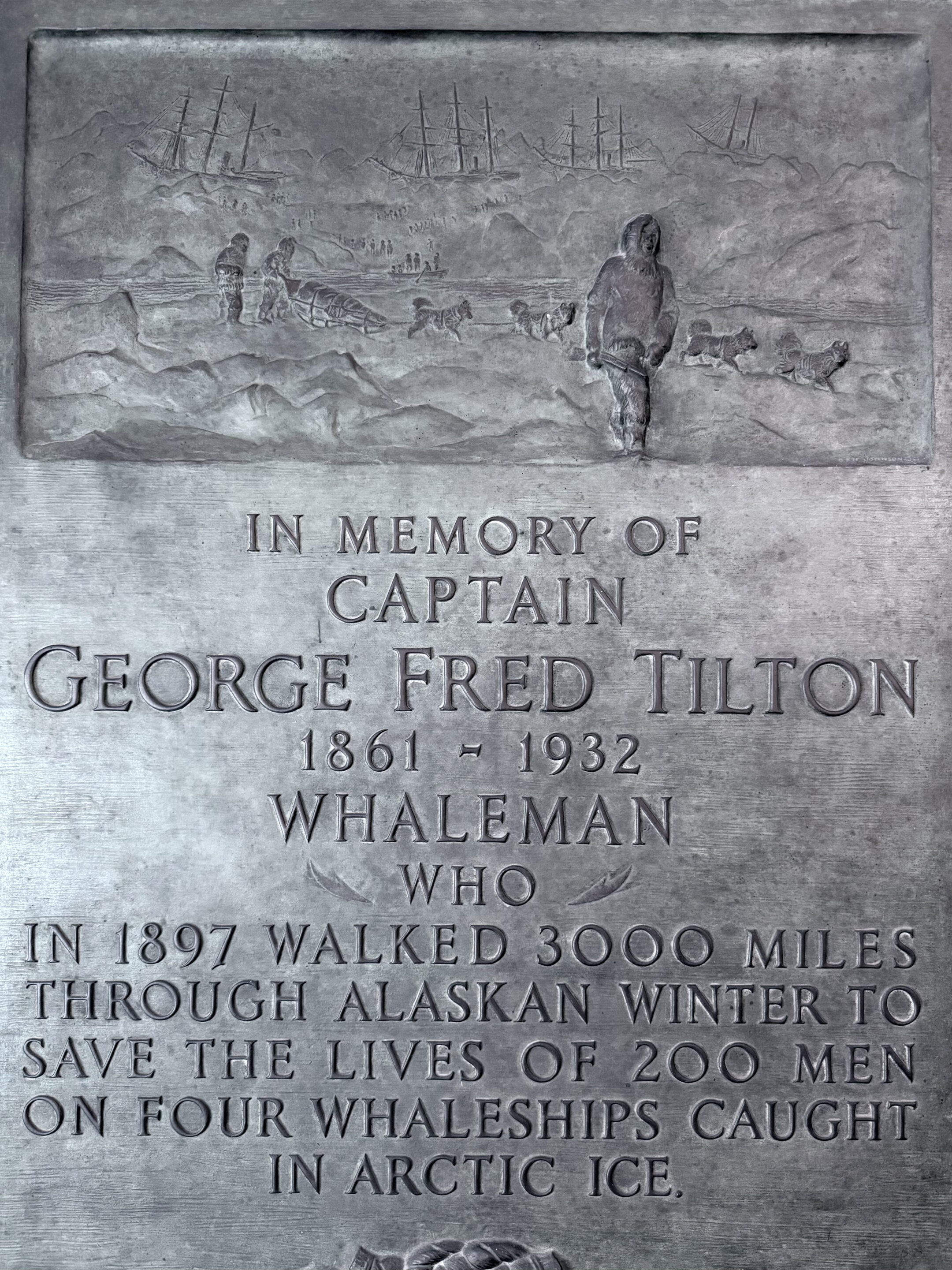
Traveling across frozen terrain in extreme cold and darkness, Tilton made his way south by foot and dogsled, relying along the way on the knowledge, hospitality, and assistance of Alaska Native people and communities. Historical accounts associated with Tilton and his memorial describe the journey as approximately 3,000 miles, a figure that became an important part of the story remembered in New Bedford.
Tilton’s journey was one part of a much larger effort to aid the stranded whalers. The eventual relief of the fleet should not be credited to Tilton alone. Alaska Native communities provided crucial food, shelter, guidance, and other assistance, while the federal government organized the Overland Relief Expedition, whose members drove a herd of reindeer hundreds of miles overland to bring food to the trapped crews. Tilton’s contribution was nevertheless remarkable: he successfully made an extraordinarily difficult journey out of the Arctic and carried valuable information concerning the condition of the stranded fleet.
His adventures did not end there. In 1904, while commanding the steam whaler Belvedere, Tilton navigated the vessel through dangerous Arctic ice after it lost the use of its propeller. He later participated in an expedition connected with the disappearance of the schooner A. T. Gifford in Hudson Bay.
In his later years, Tilton became a living connection to New Bedford’s fading whaling era. During the 1920s, he helped care for the historic whaleship Charles W. Morgan at Round Hill, where the vessel had been preserved by Colonel Edward Howland Robinson Green. Tilton welcomed visitors aboard and shared stories and knowledge drawn from a lifetime at sea, helping preserve the history of American whaling for a new generation.
Following Tilton’s death in 1932, the New Bedford Port Society honored his remarkable life with a permanent memorial. On July 16, 1933, a tablet dedicated to Captain George Fred Tilton was unveiled inside the Seamen’s Bethel on Johnny Cake Hill.
That tablet remains in the Seamen’s Bethel today, commemorating a man whose life spanned the final great decades of the American whaling industry. From a fourteen-year-old beginning his life at sea to an experienced Arctic captain and later a keeper of New Bedford’s maritime heritage, George Fred Tilton’s story reflects the endurance, determination, and extraordinary experiences of those whose lives were shaped by the sea.”