
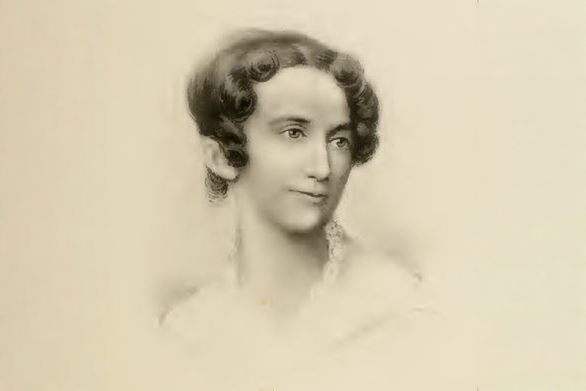
Long before the Seamen’s Bethel rose above Johnny Cake Hill, one woman’s quiet conviction helped shape the moral and spiritual foundation of New Bedford itself.
Mary Rotch (1777 – 1848) was born into the renowned Rotch family of Nantucket — a family whose whaling ventures built both the wealth and the conscience of this port city. When the family resettled in New Bedford in 1795, Mary, then just 18, brought with her a lifelong devotion to faith, intellect, and community.
From her home at the corner of Union and Second Streets (the “Mansion House”), Mary lived with grace and purpose. She was a Quaker elder at the New Bedford Friends Meeting but believed that truth could not be confined to ritual or hierarchy. Instead, she followed the Quaker belief in the Inner Light — that divine presence which shines within every soul. Her moral independence soon drew her to the more progressive “New Light” Quakers, emphasizing conscience over conformity.
Throughout the 1810s and 1820s, Mary’s home became a meeting place for conversation and reflection. She hosted a reading circle that studied writers like Virgil, Locke, and mystics of old, encouraging both men and women to write and share essays anonymously in what she called the “Budget Box.” Her essays — on themes of simplicity, cheerfulness, and moral self-examination — revealed a deep understanding of spiritual integrity. She also founded “The Fragment Society,” where women met weekly to sew garments for the poor and deliver them to those in need. Acts of quiet charity and practical faith were, for Mary, extensions of the Inner Light.
Her belief in individual conscience led to controversy: in 1824 she and her sister were disowned by the Quaker Meeting for supporting the liberal preacher Thomas Newhall. Undeterred, Mary continued her spiritual journey, eventually aligning with the Unitarian Church — the same congregation that would later inspire Herman Melville and so many who walked through the doors of the Seamen’s Bethel.
It was Mary’s compassion, intellect, and faith in moral betterment that directly linked her to the Port Society’s earliest mission. In 1831, as the Society prepared to build a chapel for New Bedford’s whalemen, Mary Rotch’s gift helped lay the foundation for what would become the Seamen’s Bethel. Her act of giving wasn’t just financial — it was philosophical. The Bethel’s purpose — to uplift, educate, and provide moral refuge for seafarers of every creed — mirrors the spiritual principles Mary championed all her life: that true worship is lived through kindness, introspection, and good works.
Mary was known to friends as “Aunt Mary,” and her home became a haven for thinkers like Ralph Waldo Emerson and Margaret Fuller, both of whom credited her with shaping their understanding of conscience and the soul’s quiet voice. Emerson later wrote that Mary’s wisdom “struck out from the rock, clear and cool in all its course — the still, small voice.”